
Introduction to HIIT and Bodyweight Training
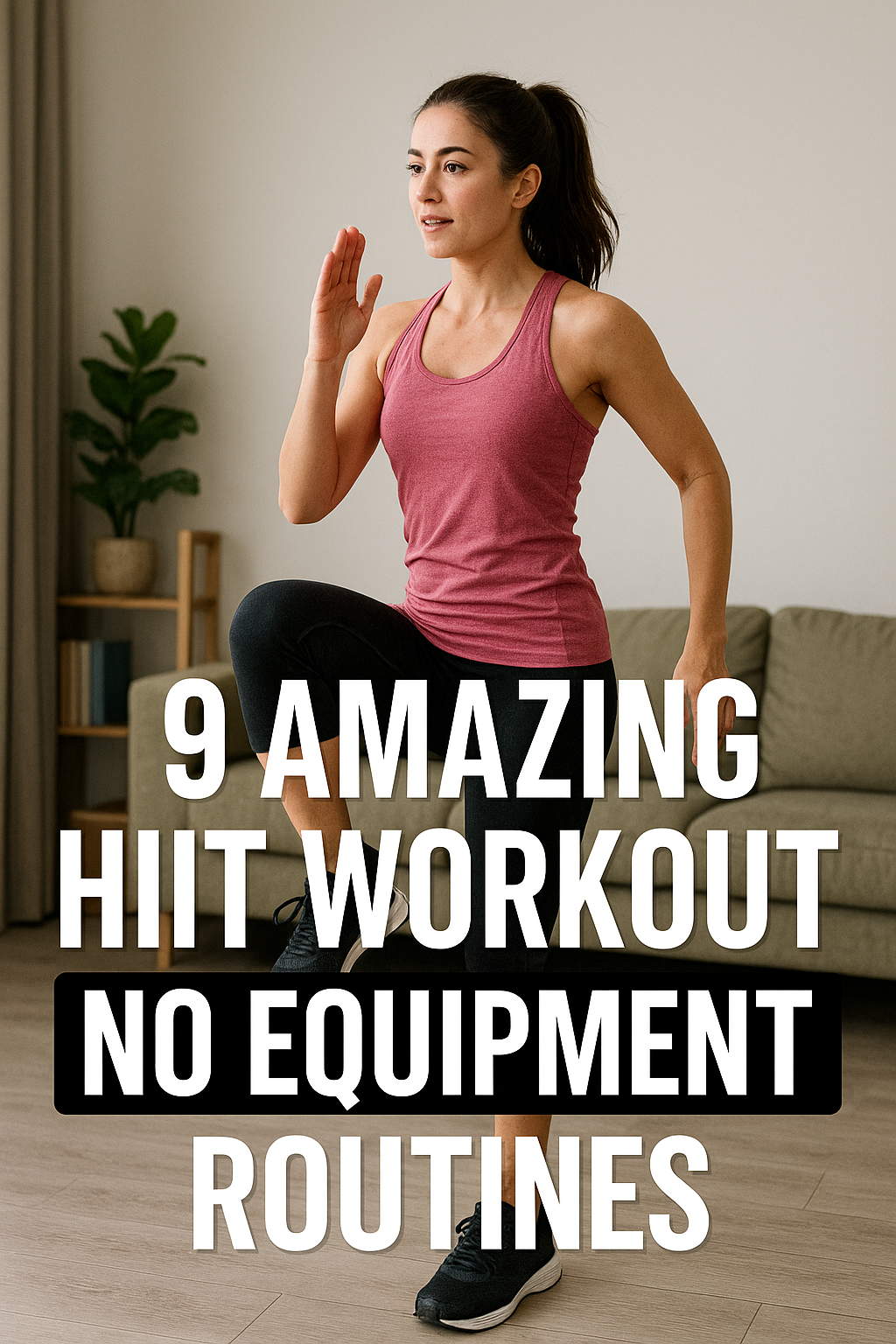
HIIT workout no equipment is a phrase that’s taking the fitness world by storm—and for good reason! High-intensity interval training, or HIIT, allows you to torch calories, build muscle, and boost cardiovascular health without needing fancy gym machines or weights. All you need is your body, some open space, and a little motivation.
If you’ve ever felt overwhelmed by complicated workout routines, or discouraged by not having access to equipment, you’re not alone. The beauty of a HIIT workout routine is its simplicity. You can exercise anywhere: your living room, a hotel room, a park, or even your backyard. Plus, these routines are scientifically proven to be effective for burning fat, improving endurance, and building strength in a short amount of the time.
So are you ready to unleash the power of a bodyweight HIIT workout? Let’s dive into what makes this style of exercise unique, why it works, and how you can get started today.
What is HIIT?
HIIT stands for High-Intensity Interval Training. It’s a style of exercise that alternates between short bursts of maximum effort (such as sprinting or jumping) and brief periods of rest or active recovery. Unlike steady-state cardio, HIIT pushes your heart rate up quickly and keeps your metabolism elevated even after you finish working out—a phenomenon known as the “afterburn effect” or excess post-exercise oxygen consumption (EPOC).
A classic HIIT structure might look like this:
- 30 seconds of intense exercise (e.g., burpees)
- 15 seconds of rest
- Repeat for 10–20 minutes
The key is intensity. You should be working hard enough that you feel breathless during the work intervals, but always able to maintain proper form.
Benefits of HIIT Workout Without Equipment
Choosing a HIIT workout with no equipment approach delivers several powerful benefits:
- Convenience: No need for weights or machines. Exercise anytime, anywhere.
- Efficiency: Burn calories and fat fast—HIIT can deliver results with just 15–30 minutes per session.
- Total-Body Engagement: Bodyweight HIIT routines recruit multiple muscle groups at once, improving strength and endurance.
- Adaptability: Workouts can be easily modified for all fitness levels.
- Improved Cardiovascular Health: HIIT has been shown to lower blood pressure, improve heart health, and boost lung capacity.
In fact, studies (Harvard Health) confirm that HIIT is one of the best ways to increase aerobic and anaerobic fitness.
“Aerobic or cardiovascular training is designed to develop a healthier heart and circulatory system,” says Howard Knuttgen, research associate in physical medicine and rehabilitation at Harvard-affiliated Spaulding Rehabilitation Hospital and a past president of the American College of Sports Medicine. “Some regimen of aerobic training is really essential to good health.”
To get the cardiac boost from interval training, you have to be willing to push yourself close to your limits—at least briefly. Three 20-minute sessions per week could add zest to your exercise experience and enhance cardiovascular fitness.

How HIIT Differs from Traditional Cardio
Traditional cardio, like jogging or cycling at a steady pace, keeps your heart rate moderately elevated over an extended period. HIIT, on the other hand, alternates between intense bursts and rest, allowing you to work harder in short spurts. This approach:
- Increases calorie burn in less time
- Boosts both aerobic and anaerobic capacity
- Continues to burn fat after your session ends
If you’re pressed for time or simply want to break the monotony of long cardio sessions, HIIT workout routines are a game-changer.
Getting Started with HIIT Workout at Home
Anyone can start HIIT at home, regardless of fitness level. Here’s how to set yourself up for success, but first some safety tips.
Safety Tips for Beginners
- Warm Up: Always start with 3–5 minutes of dynamic stretching (arm circles, leg swings, torso twists) to prep your body.
- Master Form: Prioritize good technique over speed to avoid injury.
- Listen to Your Body: It’s normal to feel out of breath, but you shouldn’t feel pain.
- Cool Down: After your session, spend 3–5 minutes stretching to help your body recover.
Structuring an Equipment-Free HIIT Session
A typical HIIT workout (no equipment required) can be built around the following structure:
| Phase | Activity | Duration |
| Warm-Up | Dynamic movements | 3–5 mins |
| HIIT Intervals | High-intensity bodyweight moves | 15–20 mins |
| Rest | Short, between intervals | 10–30 sec |
| Cooldown/Stretch | Gentle stretching | 3–5 mins |
You can mix and match exercises to keep things fresh and challenging. The important thing here is to push yourself but don’t hurt yourself, an injury is just going to delay your progress.

The Best HIIT Workout No Equipment Routines
Ready to break a sweat? Here are some of the best HIIT routines you can do at home, each targeting different muscle groups for a total-body burn.
20-Minute Full-Body HIIT Blast
A quick and effective routine that requires nothing but your own body weight!

Exercise List & Circuit Structure
| Exercise | Interval | Rest | Rounds |
| Jump Squats | 30 sec | 15 sec | 4 cycles |
| Push-Ups | 30 sec | 15 sec | 4 cycles |
| Mountain Climbers | 30 sec | 15 sec | 4 cycles |
| Alternating Lunges | 30 sec | 15 sec | 4 cycles |
| Plank Shoulder Taps | 30 sec | 15 sec | 4 cycles |
| High Knees | 30 sec | 30 sec | 4 cycles |
- Perform each move for 30 seconds, rest for 15 seconds, and move to the next exercise.
- Complete all exercises, rest for 60 seconds, then repeat the circuit 4 times.
Lower Body HIIT Circuit
Build powerful legs and glutes, no equipment necessary!
- Squat Jumps: 40 seconds
- Alternating Reverse Lunges: 40 seconds
- Glute Bridge March: 40 seconds
- Lateral Lunges: 40 seconds
- Wall Sit: 40 seconds
Rest for 20 seconds between exercises, and repeat the circuit three times.


Upper Body & Core HIIT
Strengthen your arms, chest, and core with this quick blast:
- Push-Ups: 30 seconds
- Plank to Push-Up: 30 seconds
- Tricep Dips (using a chair/bench): 30 seconds
- Bicycle Crunches: 30 seconds
- Side Plank (each side): 30 seconds
Rest 15 seconds between moves, repeat for three rounds.
Cardio-Focused HIIT at Home
Get your heart rate soaring with these classic moves:
- Burpees: 40 seconds
- Jumping Jacks: 40 seconds
- Skaters: 40 seconds
- High Knees: 40 seconds
- Tuck Jumps: 40 seconds
Rest for 20 seconds between each, and repeat the circuit three times for a major calorie burn.
Sample 7-Day HIIT Workout No Equipment Plan
Let’s take a look at a sample weekly plan you can follow or customize:
| Day | Workout Routine |
| Monday | 20-Minute Full-Body HIIT Blast |
| Tuesday | Lower Body HIIT Circuit |
| Wednesday | Cardio-Focused HIIT |
| Thursday | Rest or Active Recovery (yoga) |
| Friday | Upper Body & Core HIIT |
| Saturday | Mix & Match: Favorite Moves |
| Sunday | Rest or Light Stretching |
Tip: Listen to your body! Take extra rest if needed.
Beginner, Intermediate, and Advanced Modifications
- Beginners: Reduce work intervals (e.g., 20 seconds on, 20 off), focus on form, skip plyometrics if needed.
- Intermediate: Stick to 30–40 second intervals, increase the number of rounds.
- Advanced: Add plyometric moves (tuck jumps, explosive push-ups), shorten rest periods, or do more rounds.
Tips to Maximize Your Results
- Nutrition Matters: Fuel your body with lean protein, healthy carbs, and plenty of water.
- Prioritize Sleep: Recovery happens overnight, so aim for 7–9 hours of rest.
- Track Progress: Keep a workout journal or use a fitness app.
- Switch It Up: Try new moves or change up the circuit every few weeks to avoid plateaus.
Common Mistakes to Avoid
- Skipping Warm-Up/Cooldown: Increases risk of injury and soreness.
- Poor Form: Focus on quality, not just speed.
- Overtraining: More isn’t always better—give your body time to recover.
- Ignoring Rest: Rest days are essential for muscle repair and growth.
Frequently Asked Questions (FAQs)
1. Is a HIIT workout no equipment routine effective for weight loss?
Absolutely! HIIT without equipment is highly effective for burning fat, boosting metabolism, and supporting weight loss—especially when combined with a balanced diet.
2. How many times a week should I do HIIT?
2–4 times per week is ideal for most people. Rest is crucial for recovery and muscle growth.
3. Can beginners try HIIT workouts at home with no equipment?
Yes, but start slowly. Focus on proper form, shorter intervals, and modify exercises as needed.
4. How long should a no-equipment HIIT session last?
Most routines last 15–30 minutes. Quality matters more than quantity!
5. Do I need to do extra cardio along with HIIT?
HIIT can replace traditional cardio, but adding variety (walking, cycling, etc.) is beneficial for overall fitness.
6. What should I eat before and after a HIIT workout?
Eat a light, balanced meal 1–2 hours before (like oatmeal or a banana with peanut butter), and refuel with protein and carbs afterward to support recovery.
Conclusion: Why HIIT Workout No Equipment Routines Work
HIIT workout no equipment routines offer unmatched flexibility, efficiency, and effectiveness. With nothing but your body and determination, you can boost fitness, lose weight, and feel energized. Remember, the best workout is the one you can stick to—so keep it fun, challenge yourself, and celebrate every win!