
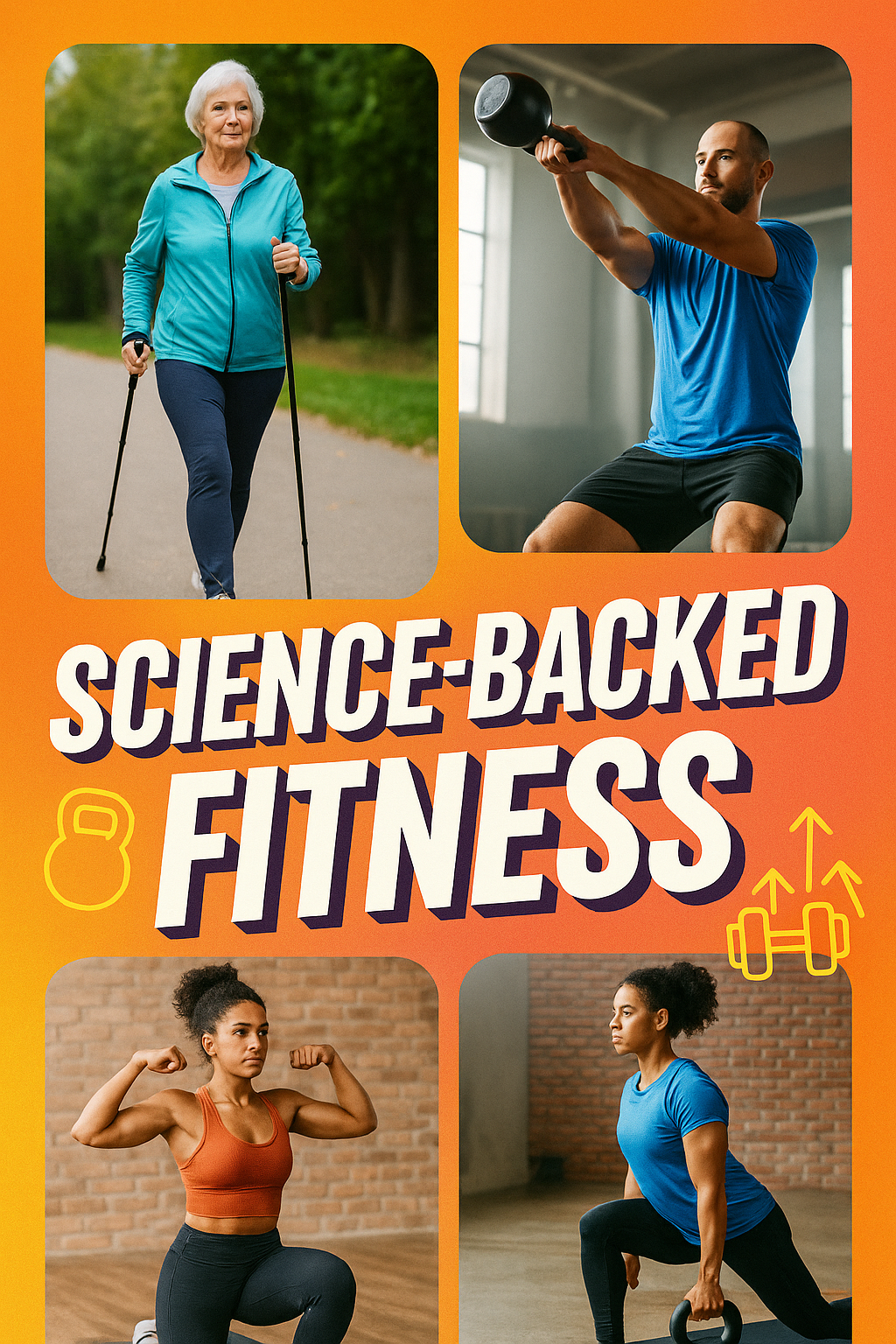
In a sea of flashy promises and quick fixes, true science-backed fitness delivers sustainable health gains that last. Consequently, by focusing on evidence-based methods—rather than “miracle” gadgets or extreme fads—you’ll build strength, mobility, and endurance the right way. Below, we dive deeper into seven core pillars of science-backed fitness, complete with practical tips and outbound resources to help you get started.
1. Gimmick vs. Genuine: Why Easy Fixes Fall Flat
First and foremost, it’s tempting to chase the latest weight-loss drugs or smart devices promising effortless results. However, studies repeatedly show that quick-fix solutions often deliver only short-term gains—and can even backfire in the long run.
- Behavioral Durability: A 2024 review in the Journal of Behavioral Medicine found that people relying on “magic bullet” approaches were 60% more likely to revert to old habits within six months (source).
- Cost vs. Benefit: Meanwhile, traditional exercise methods—walking, resistance training, and interval workouts—require little to no investment yet yield consistent improvements in cardiovascular health, muscle mass, and mental well-being (Mayo Clinic).
Therefore, to embrace science-backed fitness, prioritize time-tested routines over any device or pill that promises a shortcut.

2. Trendy Interval Walking That Works
Next, interval walking has emerged as a true science-backed fitness strategy—especially the Japanese walking method, which alternates brisk and relaxed paces.
- Protocol Details
- Duration: Alternate 3 minutes of fast walking (about 70% of max heart rate) with 3 minutes of comfortable pace.
- Frequency: Aim for 4–5 sessions per week, 30 minutes per session.
- Physiological Benefits
- Cardiovascular Gains: In a 2023 study, participants increased VO₂ max by 12% after 8 weeks of interval walking (American Heart Association).
- Glucose Control: A randomized trial published in Diabetes Care noted significant improvements in insulin sensitivity among middle-aged adults.
- Getting Started
- Wear supportive shoes and choose flat terrain.
- Use a basic interval timer app or simply glance at your watch.
- Focus on posture: shoulders back, core engaged, gaze forward.
By integrating these intervals, you’ll experience more of the science-backed fitness benefits of high-intensity training—without the joint stress of running.


3. Make Strength a Habit
Moreover, resistance training remains the cornerstone of science-backed fitness. By building muscle and bone density, strength work protects against age-related decline.
- Recommended Weekly Volume:
- Beginners: 2 sessions/week, full-body routines (squats, push-ups, rows).
- Intermediate: 3–4 sessions/week, split routines (upper body/lower body).
- Key Exercises & Links:
- Squats & Lunges: Engage quads, glutes, hamstrings (ACE Demonstration).
- Push-Ups & Pull-Ups: Strengthen chest, back, and core.
- Deadlifts: Train the posterior chain safely with proper coaching.
- Periodization Principle: Cycle between “strength” phases (lower reps, heavier load) and “endurance” phases (higher reps, lighter weight) every 4–6 weeks to avoid plateaus.
In addition, consistent strength training supports metabolic health, aids weight management, and enhances posture—making it a non-negotiable element of any science-backed fitness regimen.
Learn more about maintaining healthy Testosterone levels here.
4. Embracing 2025’s Fitness Trends
Meanwhile, technology and coaching models in 2025 are designed to complement—not replace—fundamental movement. Key trends include:
- Wearable Analytics: Devices that track heart-rate variability and recovery status, helping you plan workouts for maximum effectiveness (WHO Activity Guidelines).
- Virtual Coaching: On-demand video sessions offering personalized form feedback and programming adjustments.
- Functional Fitness: Emphasis on movement patterns that mimic daily life—lifting, reaching, carrying—to boost real-world strength.
However, remember that these tools serve the goal of sustainable science-backed fitness: they should enhance consistency, engagement, and personalization rather than masking effort.
5. Building Smart Fitness Routines
Consequently, structuring your week around balanced, varied workouts is crucial. Here’s a sample template grounded in science-backed fitness principles:
| Day | Focus | Example Session |
| Monday | Interval Walking | 30 min Japanese walking protocol |
| Tuesday | Strength Training (Push) | Bench press, overhead press, push-ups, triceps dips |
| Wednesday | Active Recovery | Yoga or mobility flow + foam rolling |
| Thursday | Strength Training (Pull) | Deadlifts, pull-ups/rows, core stabilization |
| Friday | HIIT Bodyweight Circuit | 4 × 30 sec work/15 sec rest: burpees, lunges, mountain climbers |
| Saturday | Long Walk or Hike | 45–60 min moderate pace |
| Sunday | Rest or Gentle Movement | Light stretching, foam rolling, leisurely bike ride |
Moreover, rotating movement patterns and recovery strategies minimizes injury risk while maximizing adaptation—a hallmark of authentic science-backed fitness.
6. Real-Life Examples
Furthermore, real people illustrate how science-backed fitness translates into everyday success:
- Case Study: The Busy Executive
Sarah, a marketing manager, struggled to find gym time. By swapping two evening TV episodes for 20 minutes of interval walking and three 45-minute strength sessions per week, she lost 15 lbs of body fat and reported better posture within three months. - Case Study: The Active Retiree
John, 68, wanted to maintain mobility. He followed a twice-weekly resistance routine—focusing on balance drills and functional lifts—and added weekly Japanese walking. As a result, his bone density improved (DEXA scan), and he remained pain-free during golf and gardening.
These stories underscore that science-backed fitness isn’t reserved for athletes—it’s adaptable to any lifestyle.
7. Final Take: Move Smart, Not Easy
Ultimately, genuine science-backed fitness combines proven exercise methods, smart recovery, and strategic planning. While gadgets and fads may spark interest, lasting health comes from:
- Evidence-Based Protocols: Interval walking, resistance training, and functional movement.
- Consistent Scheduling: Balanced weekly routine with built-in recovery.
- Ongoing Learning: Leveraging credible sources and expert guidance.
In conclusion, skip the gimmicks and embrace the fundamentals. By doing so, you’ll enjoy stronger muscles, healthier joints, and greater confidence—without ever chasing empty promises. Step into real science-backed fitness, and let consistency be your greatest shortcut.