
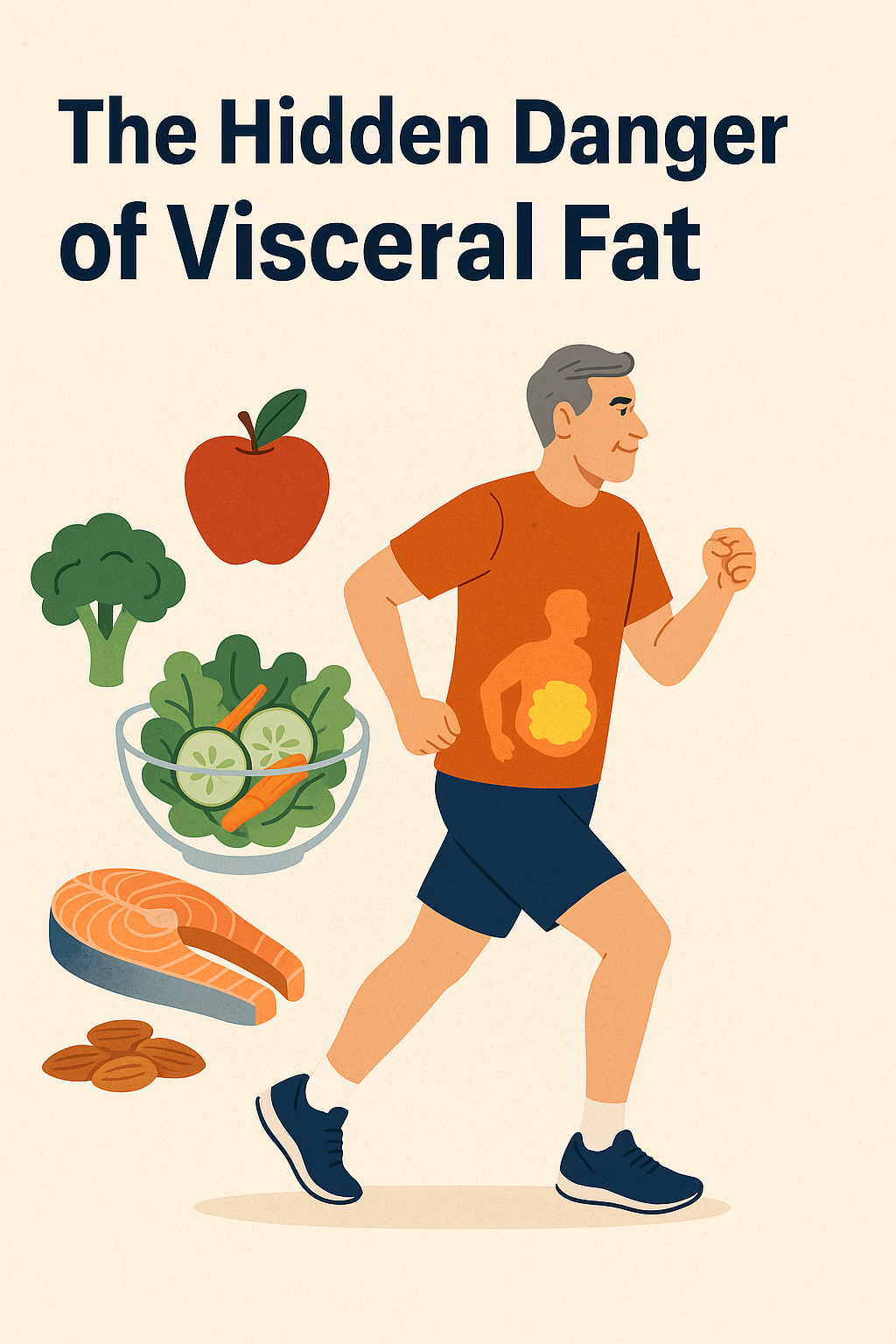
As we hit our 40s and 50s, it’s easy to blame a growing waistline on aging or a slower metabolism. Yet there’s a type of belly fat that deserves special attention: visceral fat. Unlike the pinchable layer of subcutaneous fat just under the skin, visceral fat lies deep inside your abdomen. It surrounds your organs and churns out inflammatory molecules linked to heart disease and early death. Understanding what makes visceral fat different—and more dangerous—is the first step to getting rid of it.
What Is Visceral Fat and Why Does It Matter?
Visceral fat is often called “hidden fat” because you can’t see it. While everyone focuses on the bulge they see in the mirror, there’s a hidden layer of belly fat that wraps around your liver, pancreas and intestines. It not only makes your gut look bloated; it also sends inflammatory signals throughout the body.
Unlike subcutaneous fat, visceral fat responds more quickly to lifestyle changes. With the right plan, you can start shrinking it in just a month. For example, the video this article is based on follows Jeremy’s brother‑in‑law, Dayton. Dayton looked relatively slim everywhere except his stomach, yet a DEXA scan revealed that he carried about 200 g of visceral fat and had a body‑fat percentage of 33 %. By focusing on targeted diet and exercise changes, he reduced his visceral fat by 50 % in just ten weeks.
For middle‑aged adults, that’s a hopeful message. Visceral fat is a warning sign, but it’s also one of the easiest types of fat to lose with focused action. In the sections that follow, you’ll learn exactly how to tackle it through smart nutrition, calorie balance and efficient exercise.
Dietary Strategies to Fight Visceral Fat
The food choices you make every day have a direct impact on how much visceral fat you store. While there’s no magic diet, focusing on the right macronutrients can tip the scale in your favor.
Start by cutting back on saturated fat. In a 2014 experiment, researchers overfed two groups of healthy adults by 750 calories a day using muffins. One group’s muffins were baked with polyunsaturated fats (the kind found in fish, nuts and seeds), while the other group’s muffins were made with saturated fats (like those found in butter and fatty meats). After seven weeks both groups gained the same amount of weight, but the saturated‑fat group gained double the visceral fat of the polyunsaturated‑fat group. Even more interestingly, the polyunsaturated‑fat group actually built a bit of lean mass.
For middle‑aged adults, this means you don’t need to give up your favorite foods entirely; you just need to swap wisely. Most health authorities recommend keeping saturated fat to 20–30 g per day—roughly the amount in a tablespoon of butter. Replace rib‑eye steaks and fatty cuts with leaner options such as sirloin or round. Limit butter and processed meats, and balance your meals with fatty fish (salmon, sardines), nuts, seeds and avocados.
Next, watch your sugar—especially fructose. Added sugars are composed of glucose and fructose, but fructose appears to drive visceral fat storage. In a study where participants consumed beverages sweetened with either pure fructose or pure glucose, only the fructose group saw a significant increase in visceral fat and a decline in insulin sensitivity. Unfortunately, many “healthy” foods contain surprising amounts of sugar. Bubble tea can pack up to 50 g per serving, and cereals, granola, sweetened yogurts, juices, jams and even ketchup are common culprits.
Don’t panic—fruit is not the enemy. Whole fruits contain fiber and water, making it hard to overeat them. Focus instead on cutting back on refined sugars and sugary drinks. Use natural sweetness from berries or a dash of cinnamon to flavor foods. If you love dessert, try making protein‑based versions of your favorites: think Greek‑yogurt parfaits with a drizzle of honey instead of sugary ice cream.
Finally, boost your protein intake. Protein is your secret weapon against visceral fat. In one study, participants were told only to double their current protein intake, with no other dietary guidance. Without trying, they naturally ate fewer calories and lost more than 10 lbs over 12 weeks—almost all of it fat. Eating more protein keeps you fuller for longer and helps preserve muscle mass as you lose weight, which is vital for middle‑aged adults.
Simple swaps make this easy. Add a scoop of protein powder to your coffee instead of spoonfuls of sugar. Replace caramel‑coated popcorn with air‑popped kernels tossed in a mix of protein powder, sugar‑free syrup and cheddar seasoning. Choose Greek yogurt over sugary desserts or snack on edamame instead of candy. By emphasizing lean proteins like chicken, fish, eggs and legumes, you’ll automatically reduce sugar intake and curb cravings.
Implementing these dietary strategies—reducing saturated fat, cutting added sugars and emphasizing protein—sets the foundation for shrinking visceral fat. Up next, we’ll look at how calorie balance accelerates your progress.

Calorie Deficit and Energy Balance
While diet quality matters, visceral fat ultimately shrinks when you consistently burn more energy than you consume. Even small amounts of weight loss can make a big difference. Research shows that losing just 10 lbs can reduce visceral fat by up to 30 %. That’s as close to “spot reduction” as it gets.
The number of calories you need is highly individual. In the video, Jeremy’s fitness app found that he loses fat most efficiently around 2300 calories per day, whereas his brother‑in‑law Dayton needed to eat a bit less. Factors like age, sex, activity level and muscle mass all influence your energy needs.
To create a sustainable deficit:
- Calculate your baseline. Use an online calorie calculator or wearable app that factors in your current weight, height and activity level. Start with a moderate deficit of 10–15 % below maintenance.
- Track your intake. Middle‑aged adults often underestimate portion sizes. Logging meals for a week using an app or food journal can reveal hidden calories and sugar.
- Adjust as you go. Your body adapts over time. If weight loss stalls after a few weeks, reassess your portions or increase daily activity slightly.
The goal isn’t starvation. Under‑eating can slow your metabolism and make it harder to stick with the plan. Focus on gradual, sustainable changes, prioritizing nutrient‑dense foods (lean protein, vegetables, whole grains) that keep you full. When combined with the dietary strategies above, a well‑managed calorie deficit will accelerate visceral fat loss and improve overall health. Next, we’ll explore the kinds of exercise that specifically target visceral fat.
Exercise Strategies That Target Visceral Fat
Diet lays the foundation, but movement is the catalyst that melts visceral fat. Scientists analysed thousands of participants in one of the largest studies on cardio and visceral fat and found that all types of exercise reduced visceral fat, but two stood out: moderate‑ to high‑intensity cardio and interval training. Here’s how to put that research into practice without burning out.
Incorporate high‑intensity interval training (HIIT). In HIIT, you alternate bursts of hard work with periods of recovery. The study found that getting your heart rate above about 75 % of your maximum was enough to trigger hormonal signals that mobilize visceral fat. You don’t need to sprint all‑out; the goal is to breathe hard enough that conversation becomes difficult. A simple routine looks like this:
- Warm up for five minutes with light movement (walking, cycling, dynamic stretches).
- Go hard for 30 seconds at 75–85 % of your max effort.
- Recover at a slow pace for 90 seconds.
- Repeat for 6–10 rounds.
Choose any cardio you enjoy—running, cycling, rowing or elliptical. One paper suggests running might have a slight edge over cycling, but the difference is minimal. More importantly, pick activities that you can recover from; many adults find cycling or rowing gentler on joints.
Don’t neglect volume. While HIIT is effective, the study also showed that the total amount of exercise matters more than how hard you go. Interval training is intense and requires recovery, so you can’t do it every day. On off‑days, set a goal to walk at least 8 000 steps. Walking is low‑impact, easy to integrate into daily life and still chips away at visceral fat over time.

A 30‑Day Plan for Middle‑Aged Adults
Ready to take action? Here’s a practical 30‑day blueprint that combines the nutrition, calorie balance and exercise strategies outlined above. Adjust the specifics to your fitness level and lifestyle.
- Follow a visceral‑fat‑friendly diet. Limit saturated fat to 20–30 g per day. Prioritize unsaturated fats (fish, nuts, seeds). Avoid high‑sugar drinks and foods loaded with fructose. Add lean protein to every meal; aim for 0.8–1.0 g per pound of body weight to help control appetite.
- Create a sustainable calorie deficit. Use a calculator or app to estimate your maintenance calories and reduce them by 10–15 %. Track your intake for accuracy and adjust weekly based on progress.
- Schedule HIIT sessions. Perform two to three 15‑ to 25‑minute interval workouts each week. Use the 30 s hard/90 s easy protocol described above. Warm up before and cool down after each session.
- Stay active on off‑days. Aim for 8 000 steps daily. Incorporate gentle activities like brisk walking, gardening or recreational cycling. Movement helps manage insulin sensitivity and keeps your metabolism humming.
- Monitor and adapt. Check your weight and waist circumference weekly. If progress stalls, reduce calories slightly or increase daily steps. Listen to your body; recovery is crucial, especially for middle‑aged adults.
By following this plan consistently for 30 days, you’ll likely see measurable reductions in visceral fat. Dayton’s results—cutting his visceral fat by 50 % in ten weeks—are an encouraging example. Remember that everyone’s starting point and genetics differ; stay patient and focus on sustainable habits.
Conclusion — Take Action Against Visceral Fat Today
Visceral fat is a silent threat that increases with age, but you’re not powerless. By understanding what makes it dangerous and adopting targeted strategies—reducing saturated fat, limiting added sugars, boosting protein, maintaining a calorie deficit and integrating efficient cardio—you can dramatically shrink this harmful fat. The research shows that even modest weight loss and consistent exercise can reduce visceral fat by as much as 30 %. For middle‑aged adults, addressing visceral fat isn’t just about appearance; it’s about protecting your heart, liver and long‑term health. Start with the 30‑day plan above, tailor it to your needs and stay committed. Your future self will thank you.